Category: Uncategorized

  • Land Worth Fighting For

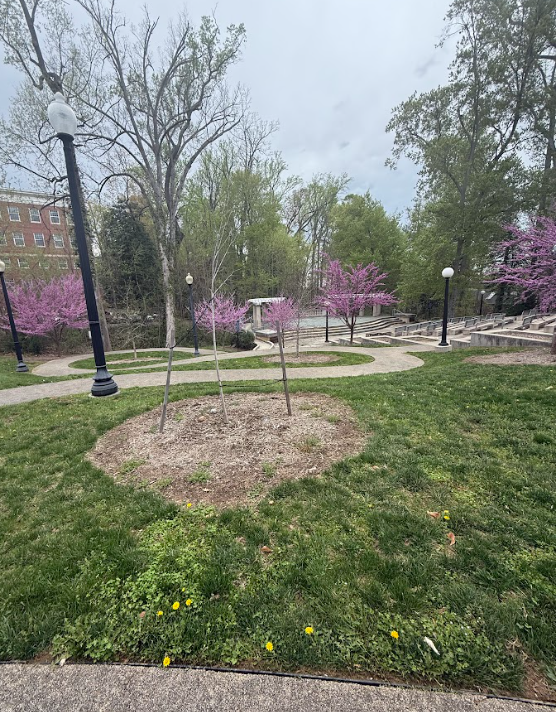
    Today I decided to take another walk on campus. Today I chose to walk on the backside of campus near Sunken Road as I rarely make my way back there. It was a lot more quiet than the front side of campus which is polluted with noisy cars and the echoes students chatting. I wandered my way towards the outdoor amphitheater and found a cool path that traced itself around some trees with beautiful pink blooming flowers on them. It probably was not the best day for me to go on the walk as it started sprinkling towards the end of my walk. It was also a little humid which is not always my favorite. However, after thinking of how “nasty” I thought it was outside I felt sort of guilty. I kept thinking of how privileged I am to even be able to walk around in an environment that is clean and well taken care of. Many people do not have this reality and instead are stuck in environments where the earth is not being cared for, which has just as much of an impact on their health as it does on the planet’s. Many people, such as Native Americans do not even have the right of still living on their own land. This made me think of our chapter thirteen reading, “Voice and Public Descent” where it is discussed that often the U.S. government will label the activism of Native Americans as terrorism. (Pezzullo and Cox, 276) Obviously the environment is at the forefront of environmental communication, however, I find it just as important to advocate and protect the rights of groups, such as indigenous people, to advocate for causes they believe in. A perfect example of people fighting for the rights of indigenous people can be seen through the article “Greenpeace faces a $300 million lawsuit after Dakota Access Pipeline protests” which we read for class. In this protest Green Peace advocated against a pipeline being implemented by protesting near a construction zone. The purpose of this protest was to make a statement on how the pipeline was near the Standing Rock Sioux Tribe’s reservation. (Brady, paragraph 6) Previous to this class I knew nothing about Green Peace or any of its movements. However, I find their type of advocacy to be extremely effective. For the most part I find that Green Peace’s advocacy tends be very loud and not able to be ignored due to the media wanting to report on it. I find it incredibly effective as it spreads the word of what people should be and how they should advocate for issues such as Native American’s land being infringed upon.

    Bibliography:

    Brady, Jeff. “Greenpeace Faces a $300 Million Lawsuit after Dakota Access Pipeline Protests.” NPR, 24 Feb. 2025, https://www.npr.org/2025/02/24/nx-s1-5292463/greenpeace-lawsuit-energy-transfer-dakota-access. Accessed 25 Apr. 2025.​

    Pezzullo, Phaedra C. and Cox, Robert J. Environmental Communication and the Public Sphere . Sage Publishing, 2006.

  • The Gift of Wisteria

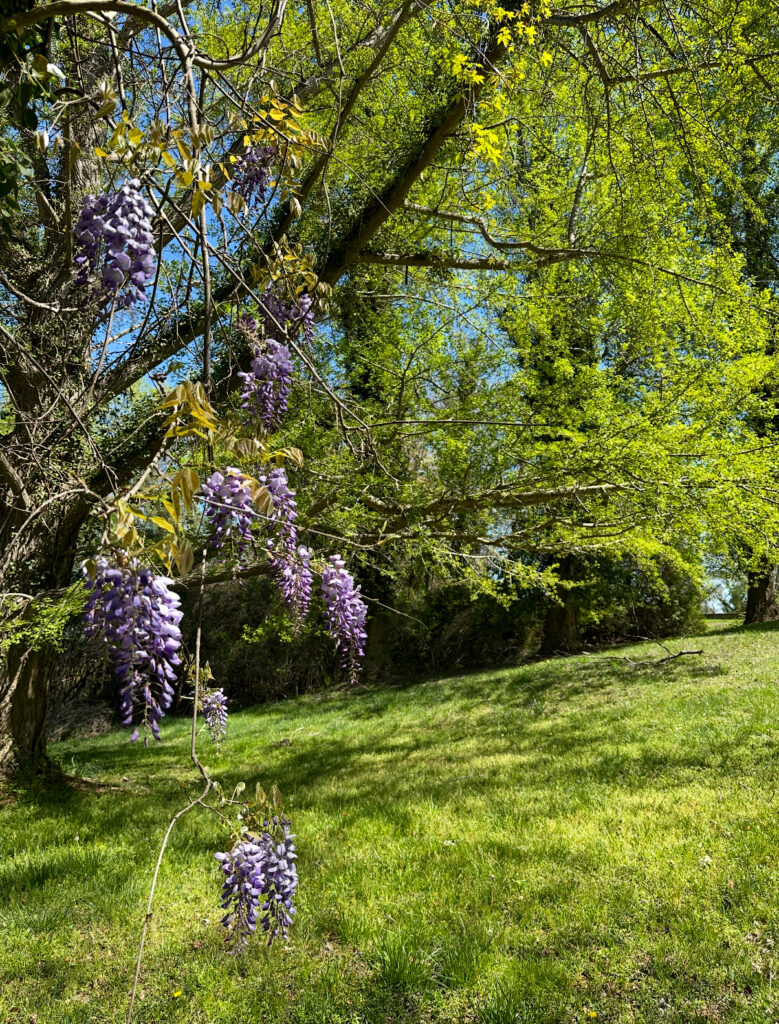
    Today was Easter. The day started out a little gloomy but ended up being very beautiful. Today for my blog I decided to take a trip to my grandmother’s house in King George, Virginia. My grandmother has a lot of land that I like to walk around on as it is very quiet and secluded. Today I heard and saw a lot of things I always associate with spring. One thing I associate with spring, shown in the photo above, is wisteria flowers. I always remember the smell of the wisteria flowers being prominent when coming to my grandparent’s farm in the spring. To me, the flowers represent all the enjoyment that spring brings me. I know as soon as I smell the sweet and floral scent of wisteria that spring is here, which usually means school is near its end and warm weather is on its way. My reflection of how meaningful wisteria are to me reminded me of the reading, “The Serviceberry” by Robin Wall Kimmerer. In her article she reflects on how things that nature gives us are “gifts” as we have to do nothing to receive them. (Kimmerer, paragraph 6) This made me further reflect on my personal relationship with nature. I find that, to me, the natural environment often becomes sort of a background thought, an idea that also emerged in Joshua Barnett’s book, Mourning in the Anthropocene. (Barnett, xi) I know I care for the environment, however, I do not care for it as actively as it does to me. The environment constantly offers me an outlet to unwind in. However, I find my response back is to always take. I take an experience away every time I am in nature but fail to reciprocate the “gifts” it has given me.(Kimmerer, paragraph 6)This reflection has made me much more conscious as to what I do to support nature back. That may be something as small picking up trash that I see on the road, or it could be as big as giving to a local wildlife charity. Nature gives me a lot of itself on the daily, I find it is my time to openly reciprocate.

    Bibliography:

    Barnett, Joshua Trey. Mourning in the Anthropocene: Ecological Grief and Earthly Coexistence. Michigan State University Press, 2022.

    Kimmerer, Robin Wall. “The Serviceberry: An Economy of Abundance.” Emergence Magazine, https://emergencemagazine.org/essay/the-serviceberry/. Accessed 25 Apr. 2025.

  • One Big Happy Family?

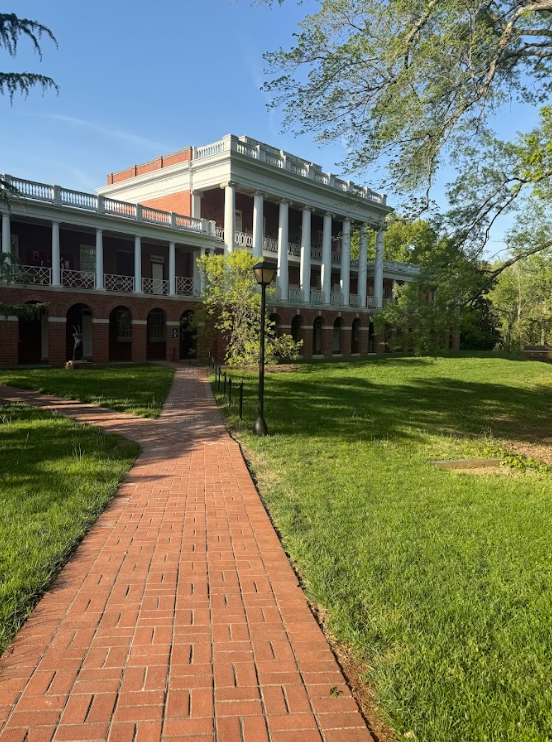
    Today I spent an hour walking around campus. It was beautiful outside, the sun was warm and I always love how campus looks in the spring. The sun illuminates the grass so much that it has a bright green hue to it. Campus to me always feels so much more inviting in the Spring as all the flowers have bloomed and students are enjoying time outside usually on Ball Circle. As I was walking I heard many animals. I heard squirrels chasing after one another, I heard birds chirping, and people talking. You may be asking, why did she include people as one of the animals listed? Well as I was walking around I found myself engaging in critical rhetoric, a term set forward by chapter five in our textbook titled “Environmental Advocacy Campaigns”. While I was walking I engaged in critical rhetoric by questioning why society does not see humans as animals. (Pezzullo and Cox, 90) The argument that most likely would be made is that humans can communicate with each other and are more intelligent than other forms of life. I fully disagree with this notion and find that it disconnects humans from nature. I find that humans and animals actually act quite similar in their everyday lives. For example, a mother bird will go back to her nest to feed her babies. Humans, I would hope, follow the same patterns. In Maria de La Bellacasa’s book, Matters of care: Speculative ethics is more than human worlds, she offers the question if care should be, “a moral obligation”. (Bellacasa, 1) I would argue that it should be due to the similarities that humans share with the animals around them. This perspective offers a familial relationship between all animals. For this reason I find it as an obligation that humans should be devoted to preserving the environment.

    Bibliography:

    Read: de La Bellacasa, Maria Puig. Matters of care: Speculative ethics in more than human worlds. Vol. 41. University of Minnesota Press, 2017.

    Pezzullo, Phaedra C. and Cox, Robert J. Environmental Communication and the Public Sphere . Sage Publishing, 2006.
  • Crisis and Aquatic Wildlife

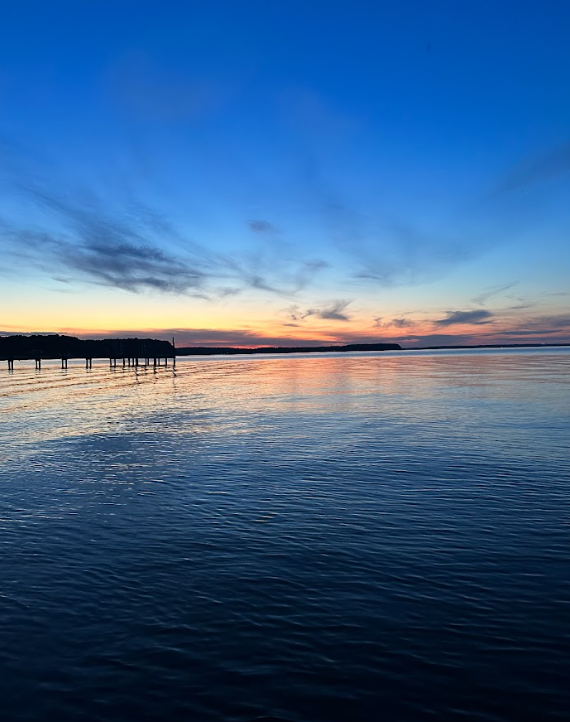
    This evening I decided to go to my grandmother’s house to walk around. It was extremely cold outside but it was still clear and sunny. While walking I picked up some sharks teeth on the edge of the water to take home to a jar that I hold all of my sharks teeth in. I also saw two bald eagles flying around the river. Growing up my grandmother always pointed out the bald eagles to me as two of them lived right next to her house for a long time. My grandmother’s house is located on a hill that overlooks the Potomac River, the land her house is located on also has beach that my family and I have been going to for years. I always enjoy coming here as it is always quiet which helps me to just focus on me and my thoughts. As I sat by the river I thought about the article by Robert Cox titled, “Nature’s “crisis disciplines”: Does environmental communication have an ethical duty?” which we read for class. Cox explained that environmental communication is a “crisis discipline” and due to that it has an added urgency to advocate for the needs of the environment. (Cox, 6) I find that this is especially important when it comes to advocating for aquatic wildlife, as I feel as though it is the most talked about. Due to this, I then thought of the article, “Great Barrier Reef Coral Bleaching Catastrophe” which we read in class to understand how different websites approached advocacy of the coral reefs. I found that specific article to be very useful in communicating the “crisis” aspect of “crisis disciple” as it featured many images of dead coral reefs. (“Great Barrier Reef Coral Bleaching Catastrophe”)Although I agree that the sole mode of environmental communication should not be rooted in scaring people, I do find that images such as these can be meaningful in helping people understand what is happening to environments that they are not directly related to, such as the coral reef, or for some, the Potomac River.

    Bibliography:

    Cox, Robert. “Nature’s “crisis disciplines”: Does environmental communication have an ethical duty?” Environmental Communication 1.1 (2007): 5-20.

    “Great Barrier Reef Coral Bleaching Catastrophe.” CNN, 23 Jan. 2025, https://www.cnn.com/2025/01/23/australia/great-barrier-reef-coral-bleaching-catastrophe-climate-intl-hnk/index.html. Accessed 25 Apr. 2025.

  • A little about me…

    I love doing anything outdoors such as kayaking, fishing, and exploring historical places in my home state of Virginia and beyond. I am always excited to travel to any new places that I can. I love experiencing new environments, people, and most importantly new food. Baking is another passion of mine, often when I am stressed with school you can find me in the kitchen baking some sort of cookie or bread. You can also always find me listening to Taylor Swift any chance that I get, my favorite album of hers is Lover.